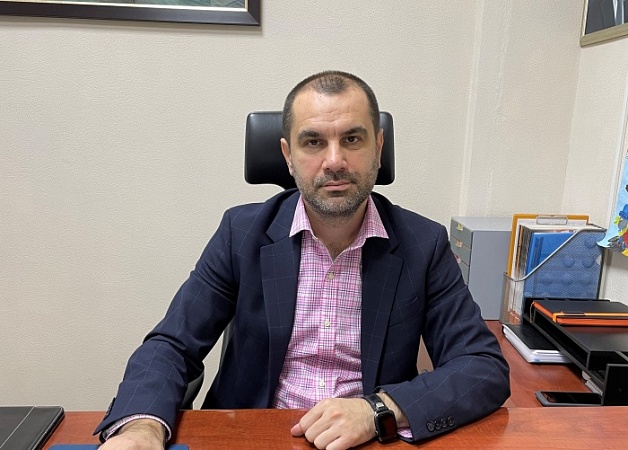
Krasnodar, 18 November. Our today’s interviewee is Vakhtangi Kocho, Chairman of the Public Council of the regional branch of the Federal Antimonopoly Agency.
Q.: Whose interests does the Public Council defend?
A.: Its aim is to ensure that the rights and freedoms of citizens and public organizations should not suffer in the course of governmental antimonopoly policy. We are the first channel to react if getting things put in order in some sphere should endanger normal work of the business sector and free market. We also perform public control over the activity of the regional branch of the Federal Antimonopoly Agency.
Q.: What current problems in the development of free competition can you enumerate?
A.: It is no secret that the Krasnodar region is interested in large investment projects. At the same time, we believe that the competitive environment should also consider interests of middle, small and micro businesses, which lay the basis of national economy. Quite often, large business can open lots of legal entities to evade liability for the violations of antimonopoly law. Although what we see is a legally clean pattern, in fact it is a company whose market share fails to meet the demands of robust competition. It cannot contribute to the development of business environment in the region. All economic subjects must have equal rights and opportunities to earn their profits, to enter markets, and to participate in contracts and governmental purchases.
Q.: How did the latest changes in the advertisement regulations, namely the unification of advertising activity and city appearance, affect the ad market in Krasnodar?
A.: When such changes were introduced, the business circles had to spend over two years on lawsuits instead of developing their businesses and working together with the transport companies and authorities. Transit advertising had always been socially oriented in Krasnodar; for many years, various social and charity projects had been implemented by initiative and at the cost of Krasnodar’s advertising companies. As a result, the advertising companies had to dissolve contracts with the transport companies; they sustained financial losses; the advertising budgets were redistributed due to the considerable reduction of the advertising carriers; and the transport companies received much less than due for the rent of their advertising surfaces. I believe that any legislative initiatives must begin with a dialogue between the authorities and the business sector – otherwise it occurs that initially all forces look to be thrown to create favourable conditions for the business, but then it is put into such constraints which give no chances to survive.
The state does not stimulate farmers to shift to such technologies, either – it could have subsidized the purchase costs which, among other things, could have helped to reduce the carbon footprint.
Follow our news on Facebook
За всеми важными новостями следите в MAX, Telegram, во «ВКонтакте», «Одноклассниках», YouTube и на Rutube