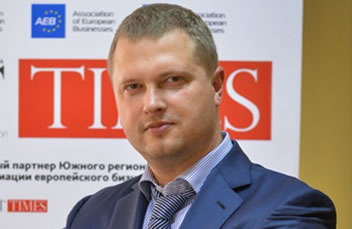
Krasnodar, 10 February. 12+ Our today’s interviewee is Yuri Pustovit, Managing Partner of the Yug Law Office.
Q.: At present, citizens tend to start thinking of distributing their property in advance, not waiting for an illness or elderly age. Do business owners usually plan the destiny of their assets beforehand?
A.: As the latest stories of sudden deaths of some business kingpins and subsequent legal suits between their heirs resulting in stoppage of their businesses and corporate conflicts showed (for instance, the case of Natura Siberica’s owner’s Andrei Trubnikov’s inheritance), even owners of large businesses were not prepared to them. However, wide media coverage of such conflicts made many people think what would happen to a business after its owner died. Nonetheless, I would not say that most businesspeople resolved this issue. There are many reasons for that: from the peculiarities of Russian mentality to imperfections of the Civil Code which regulates inheritance issues. The valid Russian inheritance law was written in the time when most of the inheritance consisted of household items or, at best, a car and a flat rather than significant material assets and business which would need a completely different approach. The appearance of testamentary foundations in Russian law did not change a lot. Consequently, one of the reasons for the businesses to go to offshore was that these issues had long ago been quite efficiently regulated there by application of English law.
Q.: Are lawyers concerned with expansion of possibilities of bringing business owners to subsidiary liability?
A.: Since 2021, the Russian Supreme Court began to demand that courts should use a more delicate and thoughtful approach, and it cancelled the court rulings in some high-profile cases where the courts had brought the top managers of debtors to subsidiary liability without legal causes thereto. For instance, the Greenfield Bank bankruptcy case, where the court had brought some of the top managers to subsidiary liability of six billion roubles was sent for retrial by the Economic Board. In fact, the danger of subsidiary liability does discipline business owners and managers – the old patterns of withdrawal of assets have not been working for a long while.
Q.: Are you aware of the situation with the Sochi National Park, where thousands of private land plots were arrested against the claim of the municipality?
A.: In practice, the Supreme Court of the Russian Federation has for the past five years constantly acknowledged citizens as innocent purchasers in such cases, and left their land plots in their ownership. Protection of private property is a priority task in any democratic state, and it determines its investment appeal. All exceptions from this rule should be something extraordinary, solitary, and always connected with paying a compensation of just market cost of the property to its ex-owner, and with brining to liability all those responsible for these violations.
Follow our news on Facebook
За всеми важными новостями следите в MAX, Telegram, во «ВКонтакте», «Одноклассниках», YouTube и на Rutube