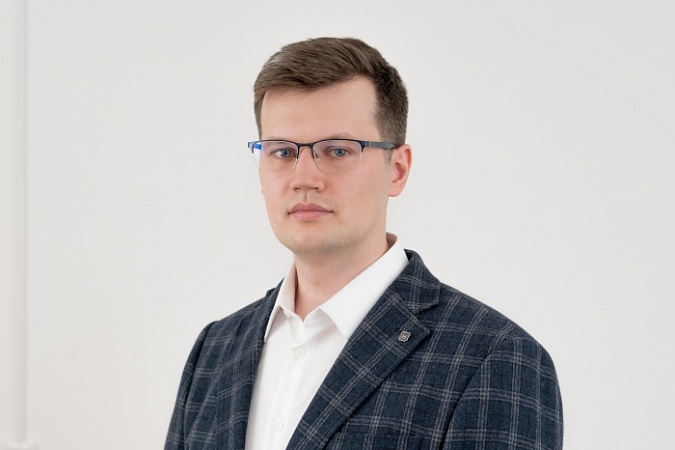
Krasnodar, 18 June. Today our interviewee is Anton Yolkin, Head of the Oncology Service of the Krasnodar branch of the federal chain of expert oncology clinics “Euroonco.”
Q.: Why did you choose the profession of an oncologist?
A.: Since my childhood, I wished to treat and help people. I grew up in the family of medical workers in Barnaul, Altai krai. As for my wish to specialize in oncology [at the medical school], it was caused by my anxiety about my fellow countrymen. Our oncology professor clearly showed us the connection between the nuclear explosions at the Semipalatinsk nuclear test site and an upsurge of cancer incidences. Radioactive precipitation fell after the tests – and in fifteen years, there was a splash of cancer. Beyond these splashes, it was a normal sickness rate. On the whole, the population of Altai krai got a radiation overdose for a certain period of time. The isotopes mixed with water and soil, and then moved to vegetables, fruits and milk. And several years after – it was a sort of latent period – an upsurge took place as the feedback to this consumed radiation. The most frequent diseases were thyroid gland and lung cancer.
Q.: How did you get to Moscow?
A.: When I was an internee, at some big conference I got acquainted with Professor Valeri Shirokoriad. He invited me to Moscow for practical training. I would tell you honestly: there I got more practical experience than during all my years at the university! But you should not be a physician at the outpatients’ clinic forever if you want to develop as a professional. In 2017, I joined Euroonco.
Q.: Nearly a year ago, when the clinic opened a branch in Krasnodar, you were sent here to develop the oncology service. What were your impressions of our city?
A.: I like it very much, but it may be very hot here in summer, which is unusual after Siberia and Moscow. Frankly speaking, I had so much work that I had no time to visit some sights. But I will have time for that, I am sure. Now it is time to help the patients. Q.: Did you have some peculiar cases? A.: Very often. It is when you had not expected anything good and just prescribed treatment, but the result exceeded all expectations. The main thing here is to make use of the achieved effect. Such cases would necessarily stick in the memory, when your patient positively reacts to the treatment, because cancer is still considered an uncured disease.
Q.: If patients with a far-advanced cancer ask you how long they would live, what do you tell them?
A.: If the patient insists, I tell the truth – for instance, if it is a patient suffering from pancreatic cancer, an incurable illness so far. There are no medicines that can be efficacious against it. Statistically, a patient may live for five or six months after the diagnosis has been established. So I would tactfully tell such patients or their relatives that they should complete some urgent matters while they are capable. I would say that this is practically an incurable disease or that it prevailed. My task is to act so that the patient would not lose the life quality. I can often see lack of some adequate attitude of my patients to their disease or to the treatment course. There are people who do not want to accept their diagnosis. Or their relatives – my least favourite situation is when everyone around knows everything, except for the patient.
Follow our news on Facebook
За всеми важными новостями следите в MAX, Telegram, во «ВКонтакте», «Одноклассниках», YouTube и на Rutube